Pro Program Live Chat 1(800)936-9115

Views: 3
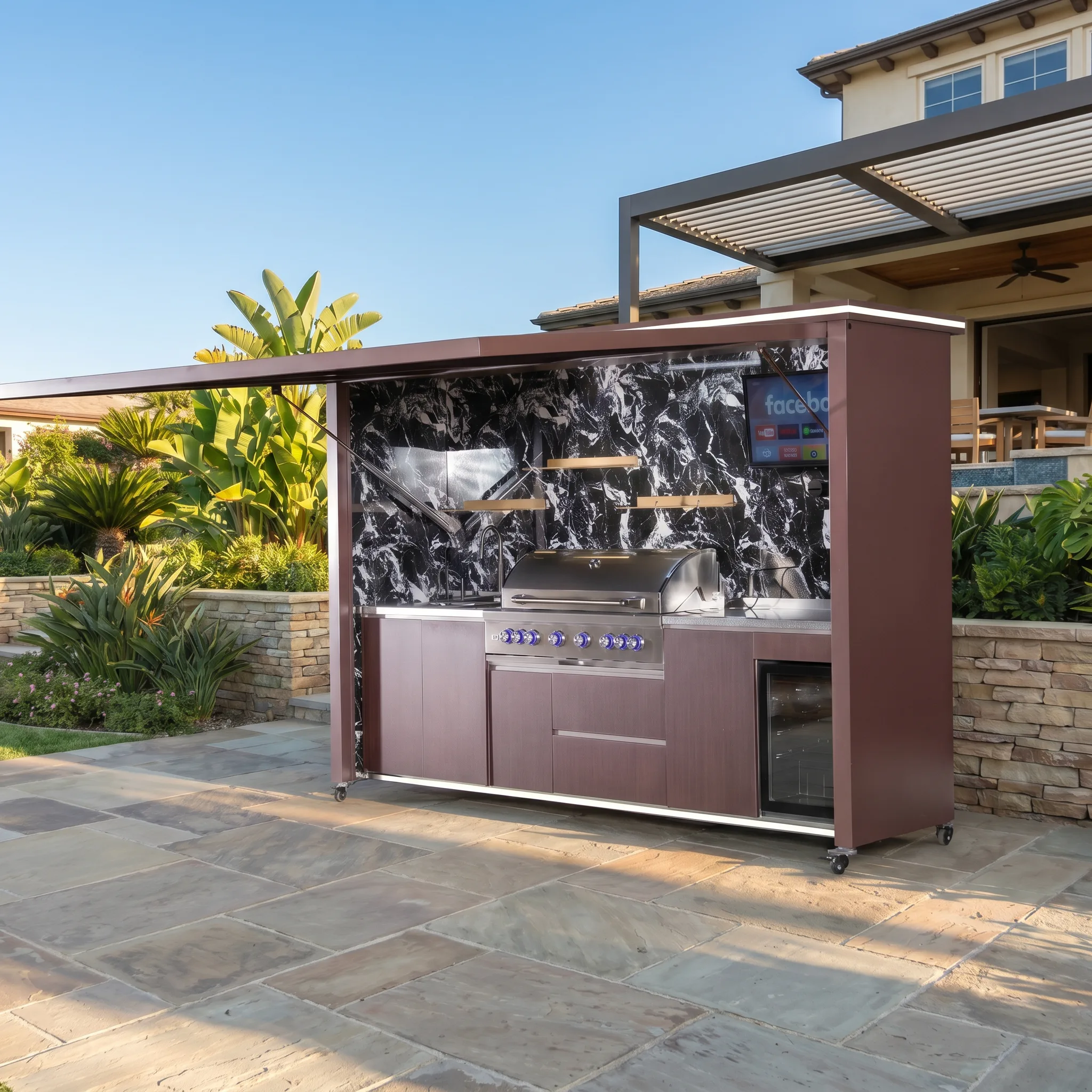
If your goal is a backyard cooking space the whole family uses on weeknights as well as weekends, build it around an enclosed outdoor kitchen with an integrated lift-up roof, enclosed cabinetry and storage, a built-in grill, an outdoor-rated refrigerator, and a multifunction sink — because that combination keeps prep, cooking, serving, and cleanup under one weather-protected roof. For upscale American homeowners who entertain often, the better investment is not a larger open grill island but a self-contained kitchen that stays organized and protected year-round.
What separates an enclosed outdoor kitchen from an open grill island?
The difference is enclosure. An open island leaves the grill, counters, and tools exposed to sun, rain, and wind and sends you indoors for food, drinks, and cleanup. An enclosed kitchen is a complete cooking room whose roof and panels close up between gatherings. Meta Lifestyle builds these as ready-to-use pods, and its outdoor kitchens collection shows the grill, refrigerator, sink, and storage working as one system. Sealed cabinetry, soft-close drawers, and weather-tested stainless surfaces stay protected inside that shell — the full-entertaining-hub approach HGTV’s outdoor-kitchen galleries showcase.
How does a motorized lift-up roof improve everyday cooking?
The roof is what makes daily use feel effortless. On the Luxury Model and the Deluxe Model enclosed kitchens, the motorized lift-up door rises into an open canopy while you cook — shade overhead, airflow all around, and easy reach to every surface — then lowers to seal the kitchen until the next meal. Both models carry a solid integrated aluminum roof made of one-piece formed aluminum panels, with fluorocarbon-coated aluminum side panels and an ultra-high-strength steel frame designed for rain, snow, and wind. When entertaining spills beyond the kitchen, the company’s motorized aluminum louvered pergolas extend the same weather-tested aluminum construction over dining and lounge areas, with adjustable louvers for sun and airflow.
Which grill and fuel setup is right for frequent entertaining?
The grill is where these kitchens earn their keep. Both motorized lift-up models pair a built-in triple-fuel grill — charcoal, LPG, or natural gas — in fingerprint-resistant SUS304 stainless steel, with flame tamers, an infrared searing zone, thick grates, a warming rack, and a griddle plate. The Luxury Model delivers 96,000 BTU across six 12,000-BTU main burners plus rear infrared and side burners, for eight temperature-control zones; the Deluxe Model offers the same triple-fuel flexibility with four main burners and a rear infrared burner. Gas makes weekday dinners instant, while the charcoal tray brings traditional smoke flavor on weekends — flexibility the Hearth, Patio & Barbecue Association credits with turning outdoor cooking into a daily habit.
Which details make refrigeration, prep, and cleanup effortless?
Small conveniences decide whether a kitchen gets used. The models include an outdoor-rated mini refrigerator of about 4.75 cubic feet, engineered to hold steady temperatures through outdoor heat and cold, with adjustable shelving and interior lighting for drinks and appetizers. The one-piece seamless welded sink adds a pull-out faucet, a purified-water faucet, a built-in cup washer, a soap dispenser, rainfall and waterfall spray, and a digital temperature display in a low-maintenance gunmetal finish. Fingerprint-free stainless steel countertops, cabinets and drawers with soft-close hardware, pull-out baskets, and a built-in trash bin keep clutter off the counters, while an optional foldable worktop adds staging space for bigger parties.
How can you verify the kitchen will hold up outdoors?
Look for documented testing. Meta Lifestyle’s testing and quality page explains that its kitchens are verified as complete systems in real outdoor conditions — thermal mapping for even grill heat, burner and ignition cycling, extreme-temperature refrigerator tests, thousands of cycles on doors and drawers, salt-spray corrosion checks, and surface durability testing against heat, moisture, and UV. Architectural Digest’s all-weather kitchen guide makes the same point: weather-ready materials and a flexible layout let an outdoor space perform in every season.
Frequently asked questions about functional enclosed outdoor kitchens
Can an enclosed outdoor kitchen really be used all year?
Yes — that is the purpose of the design. The roof, coated aluminum side panels, anti-corrosion steel frame, appliances, and finishes are engineered and tested for heat, dampness, high humidity, sea-salt corrosion, and heavy-duty use.
Can we cook with charcoal and gas in the same kitchen?
Yes. The triple-fuel grill has a dedicated charcoal tray plus LPG and natural-gas capability, so you can switch from fast gas grilling on a Tuesday to charcoal flavor for a Saturday cookout without owning two grills.
Is a built-in outdoor refrigerator worth it?
For regular entertaining, yes. An outdoor-rated refrigerator keeps drinks and ingredients close and removes most trips to the indoor kitchen.
How much storage is built into an enclosed model?
Expect enclosed base cabinets, drawers and pull-out baskets with soft-close hardware, open under-counter space, and a built-in trash bin — room for tools, utensils, and serving pieces to stay organized and off the countertops.
What is the difference between the Luxury and Deluxe enclosed models?
Both include the motorized lift-up roof door, integrated grill, refrigerator, multifunction sink, storage, and TV. The main difference is the grill: the Luxury Model’s six-burner layout creates eight temperature-control zones, while the Deluxe Model’s four-burner layout has five — choose by how many you typically cook for.
How is an enclosed kitchen delivered and positioned?
Units arrive fully integrated in ISPM 15-compliant, fumigation-free plywood crates with two swivel and two brake wheels exposed, so they roll into place without unpacking and without a custom build. As This Old House’s outdoor-kitchen guide advises for any project, confirm local siting and code requirements before final placement.