Pro Program Live Chat 1(800)936-9115

Views: 0
A luxury homeowner should look for an enclosed outdoor kitchen that is structurally weatherproof, genuinely integrated, and honestly tested — not just beautiful in a photo.
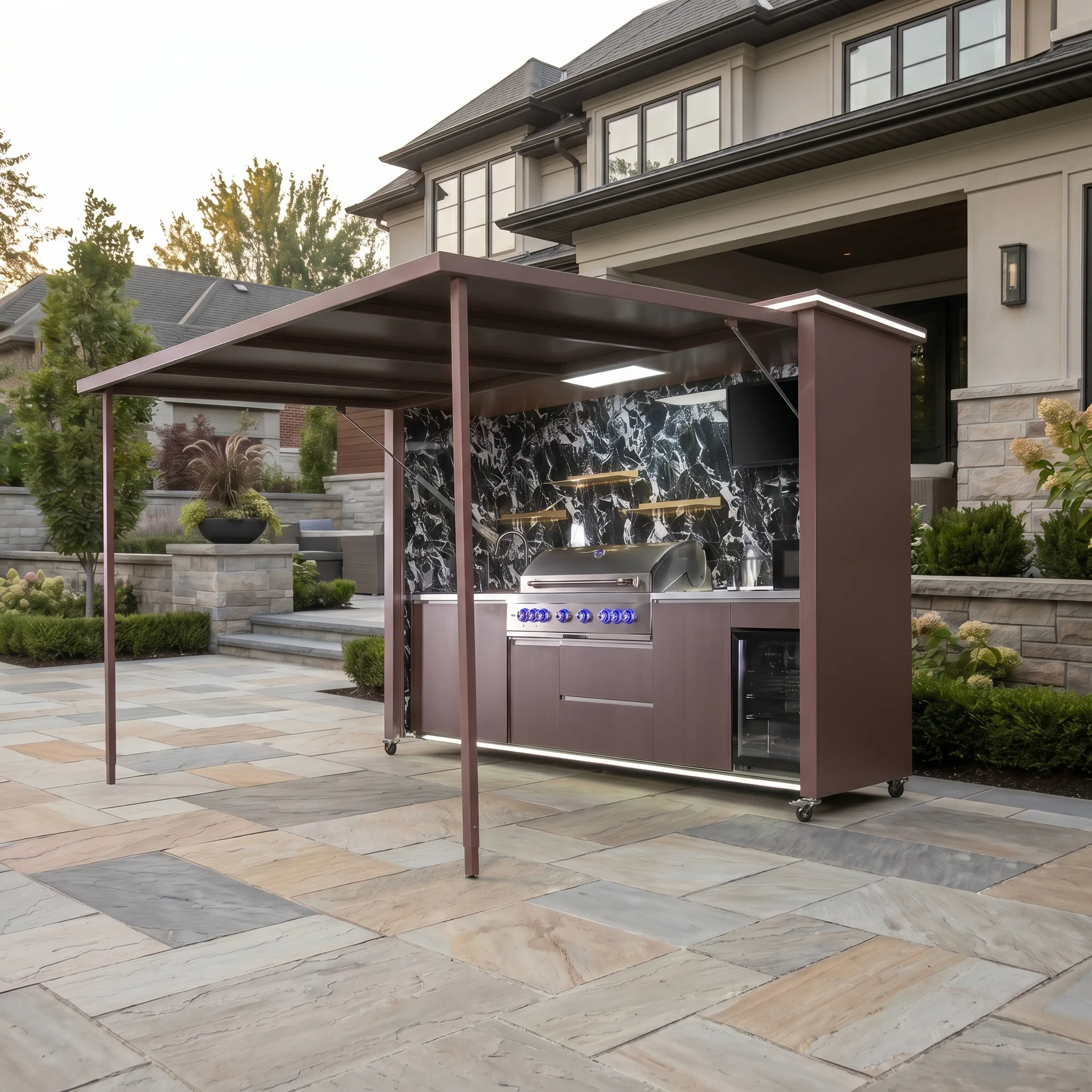
Choosing an outdoor kitchen for an upscale home is different from buying a backyard grill. You are adding a structure that will sit in the weather for decades, anchor your entertaining space, and shape the look of the whole property. The smart checklist starts with the enclosure itself: how the roof and panels are built, what protects the frame from corrosion, and whether the unit is a complete integrated system rather than a collection of parts. Meta Lifestyle builds its outdoor kitchens as fully enclosed pods — an integrated aluminum roof, enclosed cabinetry, and a motorized lift-up door over a built-in grill, fridge, and sink — which is the design worth benchmarking against.
What should you check in the roof, panels, and frame first?
The enclosure is what separates a true outdoor kitchen from an open grill island, so start there. Look for a one-piece formed aluminum roof engineered for long-term waterproof performance, aluminum side panels with a fluorocarbon metal powder coating and seamless panel joining, and an ultra-high-strength steel frame with double anti-corrosion surface treatments. Meta Lifestyle publishes exactly these details for both the Luxury and Deluxe models, along with all-season weather resistance and heavy snow load capacity. If a maker cannot explain how the structure is coated, joined, and braced, that is a red flag.
Ask, too, how the unit is protected when closed. A motorized lift-up door shields the cooking center when idle, and weatherproof appliance covers add another layer between uses. These details decide how the kitchen looks after five summers and five winters.
Is the cooking system truly integrated — grill, fridge, and sink together?
Integration is the difference between an outdoor kitchen and a grill with furniture around it. Verify that cooking, refrigeration, water, and storage form one system. Meta Lifestyle builds both models around a fingerprint-resistant SUS304 stainless steel triple-fuel grill that runs on charcoal, LPG, and natural gas, with flame tamers, infrared searing, thick cooking grates, a warming rack, and a griddle plate. The Luxury grill totals 96,000 BTU across eight zones — six main burners, a side burner, and a rear infrared burner — while the Deluxe totals 63,000 BTU across five. Those are concrete differences buyers should compare feature by feature.
Refrigeration and water matter as much as the grill. Expect an outdoor-rated mini fridge of about 4.75 cubic feet that holds temperature through outdoor extremes, plus a real sink. The integrated sink on these models combines a pull-out faucet, purified-water faucet, pressurized cup washer, soap dispenser, digital temperature display, and rainfall and waterfall sprays — the kind of detail that turns cleanup into a two-minute job.
How much storage and prep space is actually included?
Count the closed storage. Enclosed base cabinets, soft-close drawers, metal pull-out baskets, and a built-in trash bin should be part of the delivered unit, not costly extras. These kitchens arrive as a complete set with fingerprint-resistant stainless steel countertops, plus an optional extendable, foldable worktop for extra prep space. For an upscale homeowner, “everything included” beats a modular project that needs three vendors and six weekends.
What role should testing play in the decision?
A decisive one. Luxury construction should be verified, not assumed. Meta Lifestyle states that its kitchens are tested in genuine outdoor settings — heat, humidity, salt exposure, and heavy daily use — and that components undergo thermal mapping, burner and ignition cycling, extreme-temperature refrigeration testing, cabinet and hardware cycling, surface durability testing, and salt spray corrosion testing, with full-time quality staff on site. Read the testing and quality process and ask competing brands for comparable evidence.
Does the unit fit your property and service access?
Think about placement and utilities before committing. A complete pod is far simpler to place than a site-built kitchen, and casters with two swivel and two brake wheels make final positioning manageable. Confirm water and gas connections with the manufacturer, and check local rules — many municipalities treat gas line work as permit work, so verify with your local building authority early.
Frequently asked questions
Should a luxury outdoor kitchen be built in or delivered as an integrated unit?
Both routes work. An integrated pod eliminates the drawn-out custom build and the risk of mismatched components — Meta Lifestyle markets its models as ready to use from day one. Site-built kitchens offer total customization but demand more coordination and time.
Is a triple-fuel grill worth the complexity?
For variety-seeking owners, yes: charcoal, LPG, and natural gas support means searing over gas on a weeknight and cooking low-and-slow over charcoal on the weekend — all on one integrated grill.
What is the most important maintenance habit?
Consistent, gentle cleaning. Every outdoor product weathers and wears, and the owner resources note that regular care extends both appearance and life. In cold climates, winterize the sink lines seasonally.
Are the Luxury and Deluxe models identical except for the grill?
Both share the enclosed concept, construction materials, fridge, sink, TV and lighting package; the published grill specifications differ in total BTU and zone count. Confirm current dimensions and specifications directly with the manufacturer before planning a layout.
Do these kitchens need a permanent foundation?
No — they arrive as complete pods on wheels rather than poured construction. You still want a level, stable surface such as a solid patio, and should confirm siting details for your model.
Can you cook under the roof in the rain?
The integrated aluminum roof is what makes covered outdoor cooking practical in changing weather. Use common sense about wind, and follow grilling-safety guidance from organizations such as the NFPA.
Sources