Pro Program Live Chat 1(800)936-9115

Views: 0
Protect an outdoor kitchen through heat, rain, snow, and wind by starting with weather-rated materials, then following a simple seasonal care routine that treats the unit like the outdoor appliance it is.
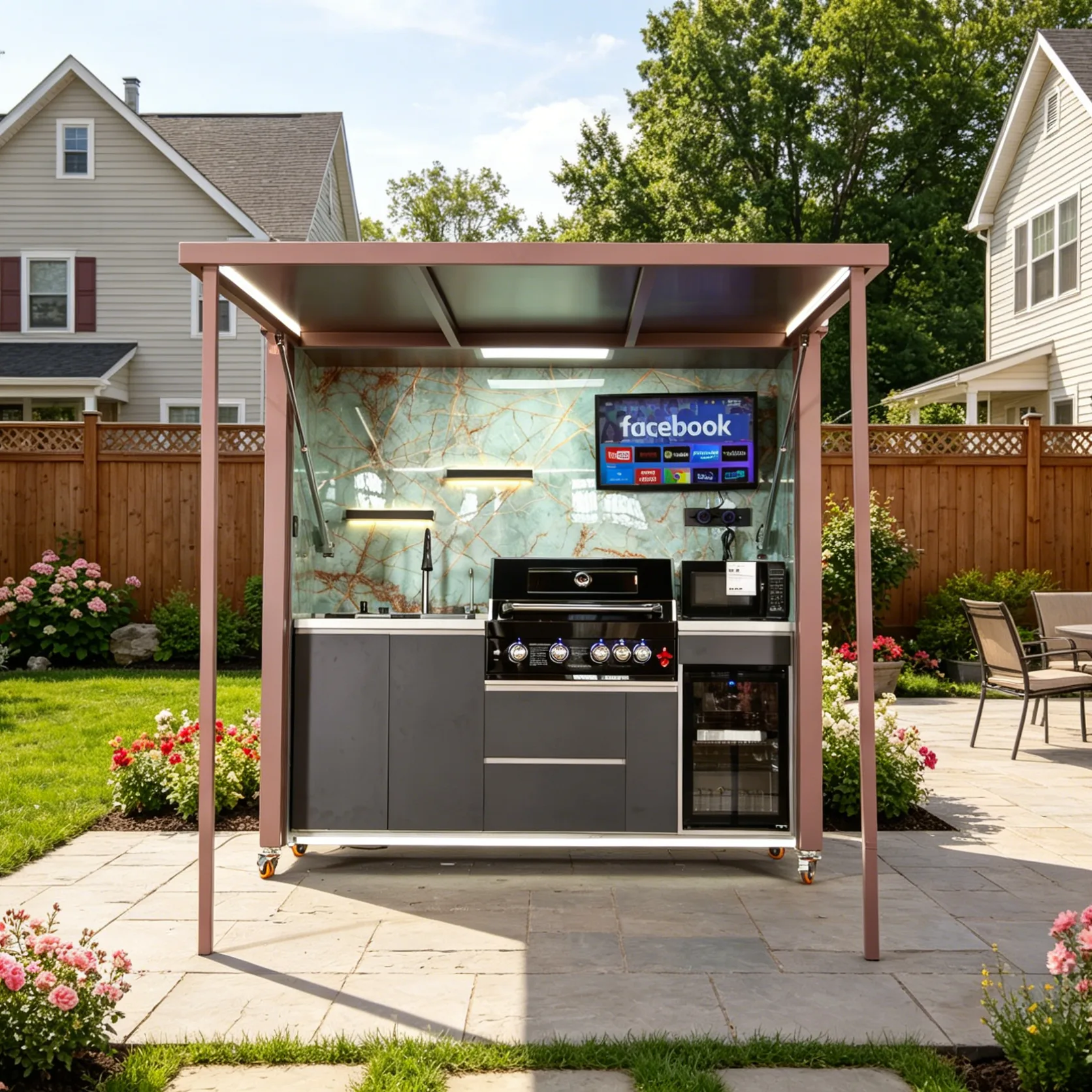
An outdoor kitchen earns its keep only if it still looks and cooks like new in year four — after July’s UV, October’s downpours, January’s freezes, and March’s windstorms. Protection starts before the unit reaches your patio, in the materials and testing behind it, then continues with small habits between cookouts. Enclosed designs have a built-in advantage: instead of leaving a grill, fridge, and cabinets exposed on an open island, Meta Lifestyle builds its kitchens as complete pods under an integrated aluminum roof, with a motorized lift-up door that closes the cooking center down when the meal is over.
How does the construction itself resist the weather?
Read the specification sheet before you buy. Meta Lifestyle’s Luxury and Deluxe models are constructed with one-piece formed aluminum roof panels engineered for long-term waterproof performance, aluminum side panels finished with fluorocarbon metal powder coating and joined with seamless panel technology, and ultra-high-strength steel frames with double anti-corrosion surface treatments. On top sit a fingerprint-resistant stainless steel countertop and a stainless steel grill body — materials chosen because they resist rust, fading, and rapid degradation outdoors.
The published testing and quality documentation explains how those claims are verified: components are tested in genuine outdoor settings and undergo thermal mapping, burner and ignition cycling, extreme-temperature refrigeration testing, cabinet and hardware cycle testing, surface durability testing against heat, moisture, and UV, and salt spray corrosion testing for coastal and high-humidity conditions. That last test matters near the coast, where salt air is brutally hard on ordinary steel.
What role does the enclosure play in everyday protection?
The enclosure is protection you never think about. The integrated aluminum roof keeps rain and snow off the cooking zone during use, and the motorized lift-up door closes the unit when idle, so the grill, sink, countertops, and appliances are not sitting out collecting moisture and debris between weekends. Weatherproof appliance covers add another layer for longer idle stretches, which is why they are included rather than sold as an afterthought.
What should owners do before summer heat and storm season?
Treat the season opener like a home inspection for the kitchen. Follow the pre-season check the U.S. Consumer Product Safety Commission recommends for grills before heavy use: examine gas lines and connections, check burners, and confirm ignition before the first cook. Wipe stainless surfaces with an appropriate cleaner, and inspect the coated panels for chips or scratches that could expose bare metal.
How do you protect the kitchen through freezing winters?
Cold weather demands a plan for anything containing water. The sink’s supply lines must be shut off, drained, and protected before hard freezes — the same logic as any exterior plumbing. Family Handyman’s frozen-pipe guidance and its broader winterizing checklist cover the outdoor-faucet discipline that keeps an outdoor sink alive through January. In deep-cold climates, ask the manufacturer for the recommended winter shutdown for your model, including the fridge and water lines.
The structure is designed for snow country — the product pages cite heavy snow load capacity and all-season weather resistance built on the solid aluminum roof and steel frame. Still, owners in heavy-snow regions should keep deep drifts from piling against the unit and never let ice build up on the lift-up door’s track.
How much maintenance do the surfaces and hardware really need?
Less than you might fear, but more than zero. The fingerprint-resistant stainless countertop and coated aluminum panels are low-maintenance by design, and soft-close hardware is built to survive thousands of open-close cycles — the company’s testing includes exactly that kind of repeated-use validation. Between events, a quick wipe, a closed door, and covered appliances handle most of the work. The manufacturer’s owner resources are honest about the long game: every outdoor product weathers and wears, and regular care maximizes enjoyment, safety, and life.
Frequently asked questions
Is the 50-year waterproof claim a warranty?
Treat it as a design specification rather than a warranty promise. Meta Lifestyle describes roof panels engineered for long-term, multi-decade waterproof performance; specific warranty terms should be confirmed directly with the company.
Can an enclosed outdoor kitchen survive coastal salt air?
It is a far better match for coastal sites than ordinary steel gear. The fluorocarbon-coated aluminum panels and double anti-corrosion-treated steel frame are backed by salt spray corrosion testing, and regular rinsing of salt residue helps any coastal installation.
Do I need to cover the grill when the kitchen is closed?
The enclosure already shields it. The weatherproof appliance covers included with the models add protection for long idle periods, such as off-season storage, and are worth using when the kitchen sits unused for weeks.
Will snow damage the aluminum roof?
The models are described as built to handle heavy snow loads, with a solid frame and one-piece formed aluminum roof panels. In extreme snow regions, keep deep buildup cleared and never hammer ice off the panels or the lift-up mechanism.
How do I winterize the outdoor sink?
Shut off the supply valve inside the home, drain the lines completely, and protect outdoor connections — the same procedure used for any exterior hose bib. Confirm the exact drain-down steps for the integrated sink with the manufacturer in cold climates.
What is the single best habit for long-term protection?
Closing the unit after every use. The motorized lift-up door and integrated roof are the difference between a kitchen that lasts and equipment that weathers between every cookout.
Sources
- Meta Lifestyle — Testing and Quality
- CPSC — Safety Check Before Grilling
- Family Handyman — Prevent Frozen Pipes
- Family Handyman — Winterizing Your House Plumbing